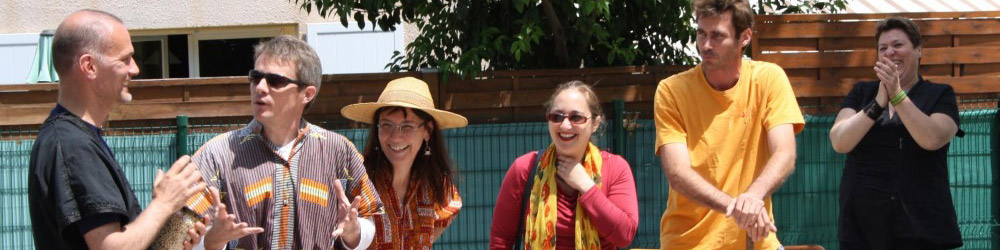
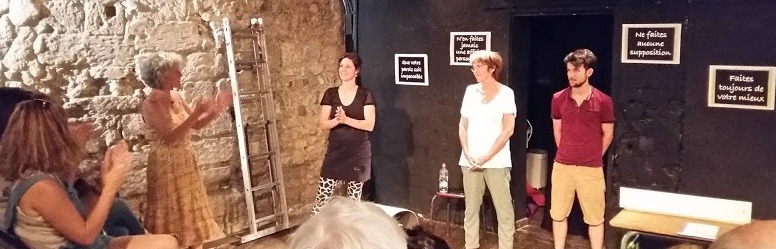

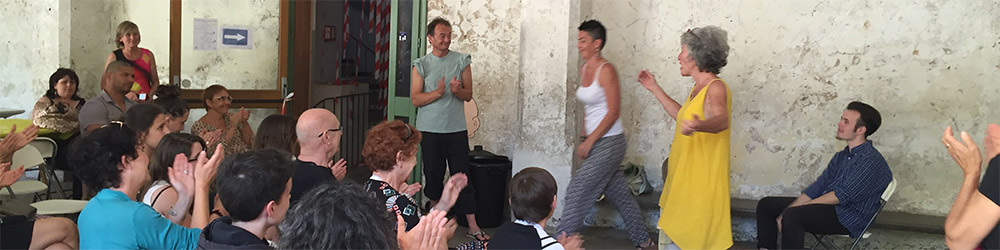
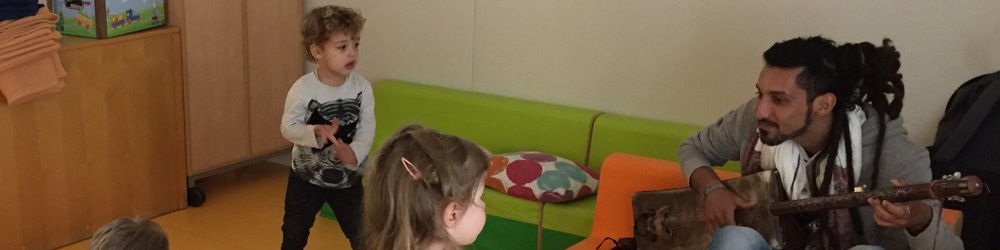
Etincelle est un organisme de formation en développement relationnel.
Depuis 20 ans nous visons à développer les compétences relationnelles, encourager l’estime de soi, l’ouverture à l‘altérité et l’intelligence collective, comme terreau d’une paix durable.
Nous explorons comment incarner à chaque instant le message de Gandhi
» Devenons le changement que nous souhaitons pour le monde «
Notre approche s’inspire de la psychosociologie, de la spirale dynamique et de la communication non-violente.
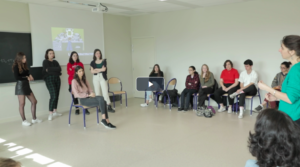
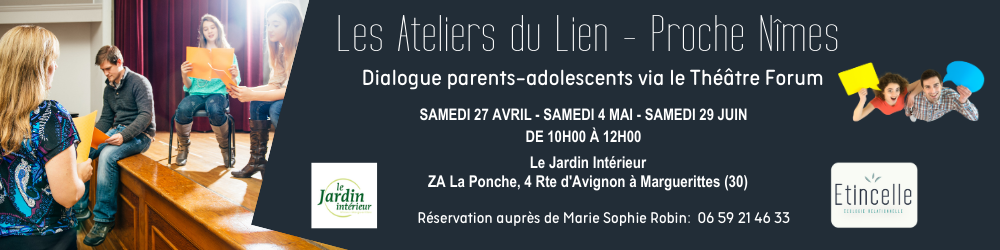
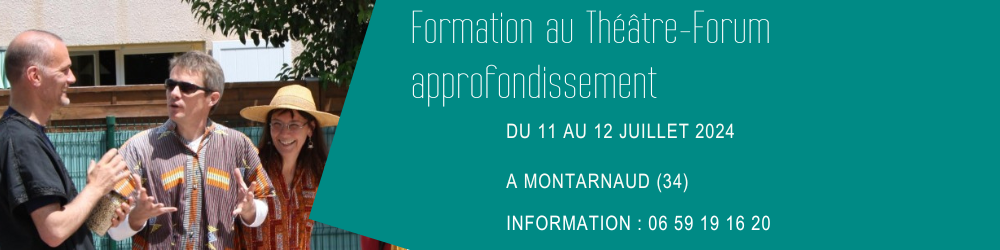
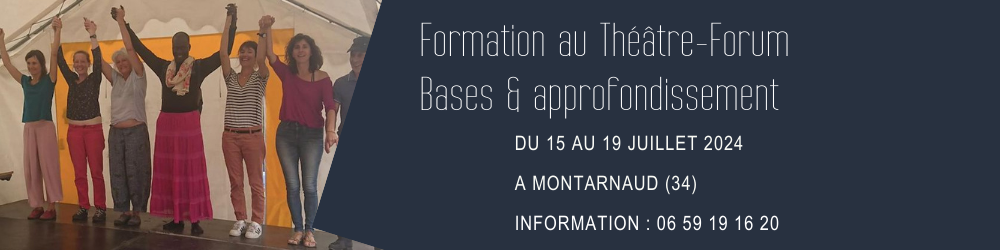
Nos approches privilégiées sont le théâtre-forum , le théâtre-forum intérieur et le playback theatre.
L’équipe de formateurs-comédiens est sous la responsabilité de Laurène Grangette, directrice d’Etincelle, avec la collaboration de Véronique Guérin, psychosociologue et présidente de l’association.
Nous créons des évènements et animons des formations dans le monde de la justice, de l’éducation et de la petite enfance, du medico-social et de l’entreprise. Et nous proposons également des spectacles et conférences théâtralisées ouvertes à tout public.
L’équipe de formateurs-comédiens est sous la responsabilité de Laurène Grangette, directrice d’Etincelle, avec la collaboration de Véronique Guérin, psychosociologue et présidente de l’association.
L’équipe
LAURENE GRANGETTE, dirigeante formatrice
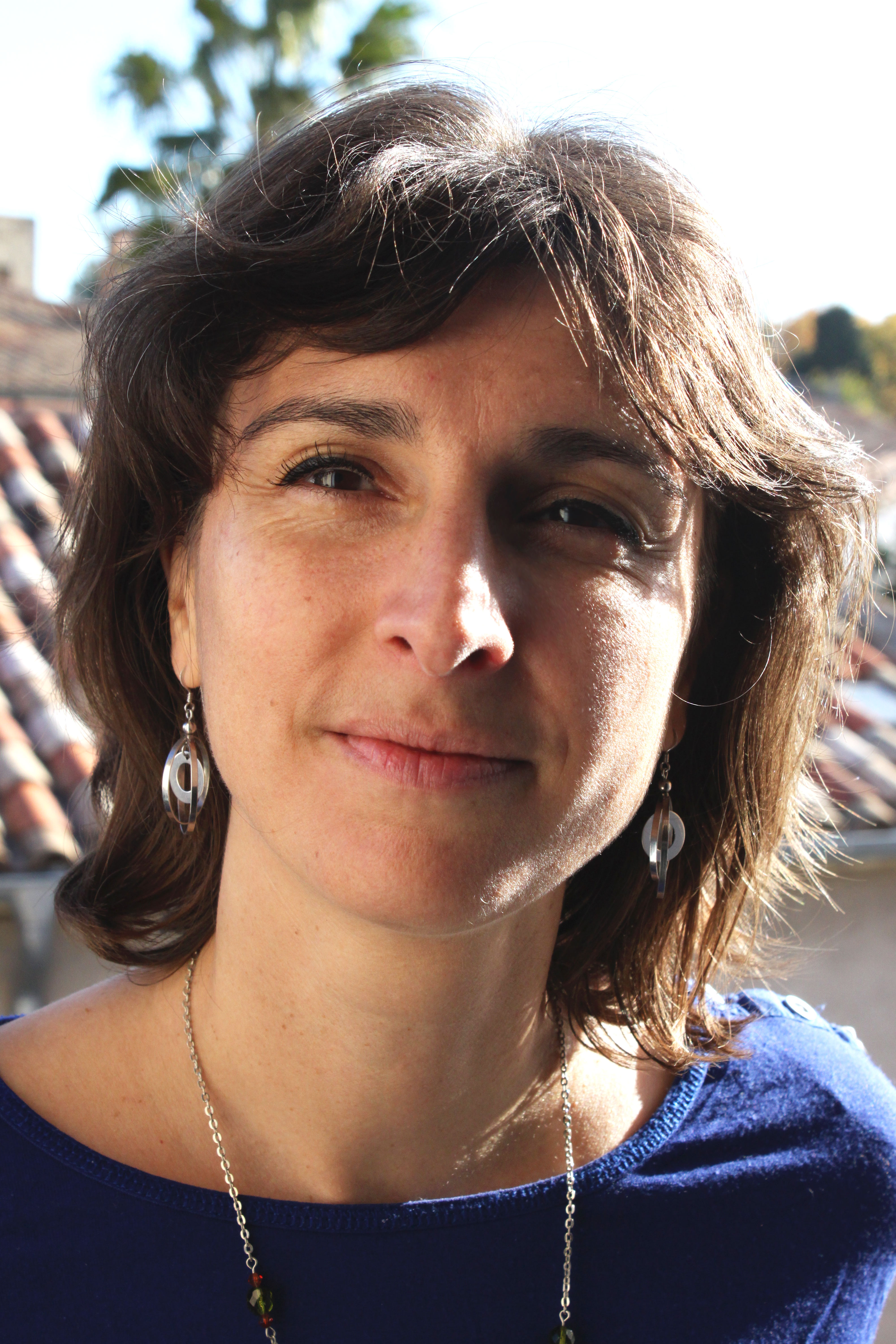
Formatrice et facilitatrice en développement relationnel, j’ai également l’honneur et le plaisir d’être la directrice d’Etincelle. Consciente que notre expérience est la somme de toutes les personnes qui interviennent et de toutes les personnes que nous formons, je suis engagée à soutenir les participants, nos partenaires & les membres d’Etincelle pour un déploiement de leur potentiel en tant qu’individu, et tout autant pour le déploiement d’une conscience collective. C’est avec cette vision audacieuse et éco-logique que je dirige l’équipe de formateurs-trices et que je soutiens chacun des espaces que j’anime.
VERONIQUE GUERIN, fondatrice, référente « Espace Public »
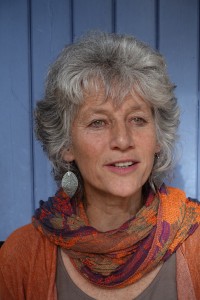
Mes deux passions, la psychosociologie et le théâtre-forum, m’ont conduite à fonder Etincelle en 1999. J’aime mettre en scène des conflits et m’émerveiller de l’intelligence relationnelle de ceux qui montent sur scène pour dénouer les tensions….
Psychosociologue de terrain, je me suis nourrie de mes observations pour expérimenter l’écologie relationnelle et créer l’approche OrganicS qui articule développement personnel, intelligence collective et engagement au service de la Vie.
J’aime la diversité de notre équipe : un micro « laboratoire » pour tenter d’incarner entre nous ce que nous cherchons à transmettre : fluidité relationnelle, créativité et joie de contribuer à plus d’humanité.
Notre actualité
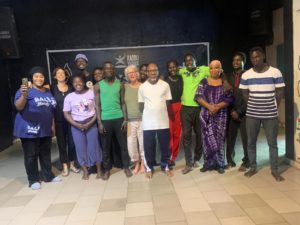
Théâtre-forum intérieur au Sénégal – carnet de voyage

Connaissez-vous les pensions de famille ?

Pourquoi adopter une démarche de pédagogie active ?

Nos liens avec le Sénégal

Méthodologie d’animation d’un groupe de parole
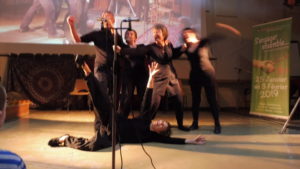
Le Playback-Théâtre ou Théâtre du Reflet…
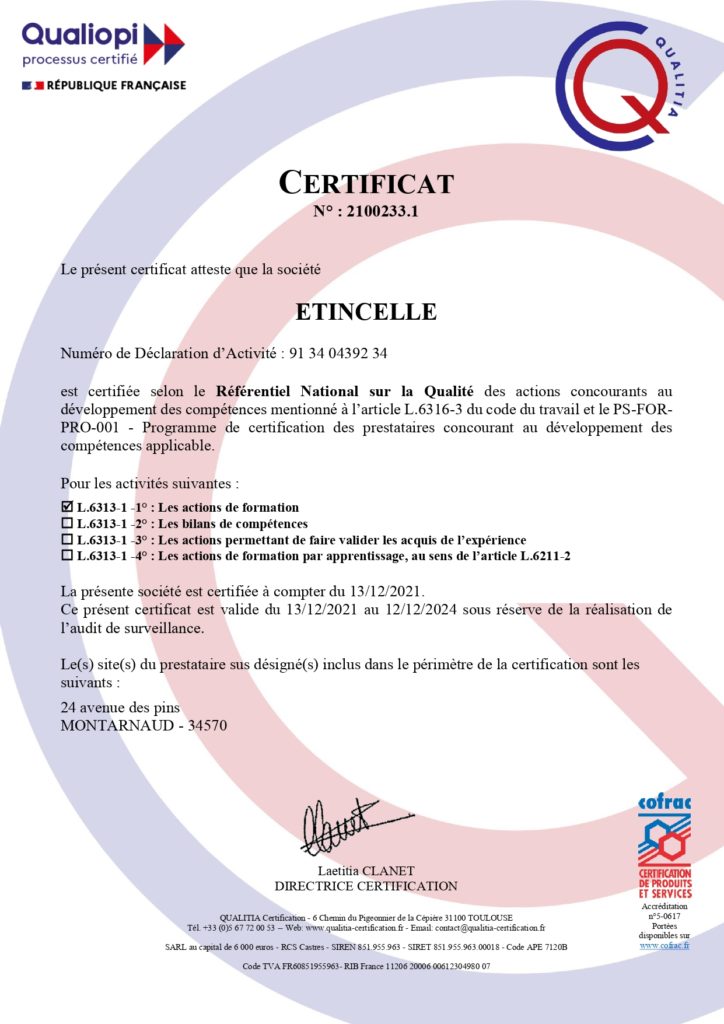
Etincelle, organisme de formation certifié Qualiopi
Nos participants affichent un taux de satisfaction de 86,81 % basé sur 9 critères d’évaluation de nos formations (attentes, durée de la formation, approche pédagogique, conditions matérielles, la place laissée à leur participation, les contenus proposés, l’acquisition des compétences/outils, l’encadrement pédagogique, les apports théoriques et la mise en pratique).
97,61 % d’entre eux recommandent nos formations.
Données basées sur les formations données entre entre le 22 novembre 2021 et le 21 juillet 2023
Toutes nos formations se déroulent en présentiel